
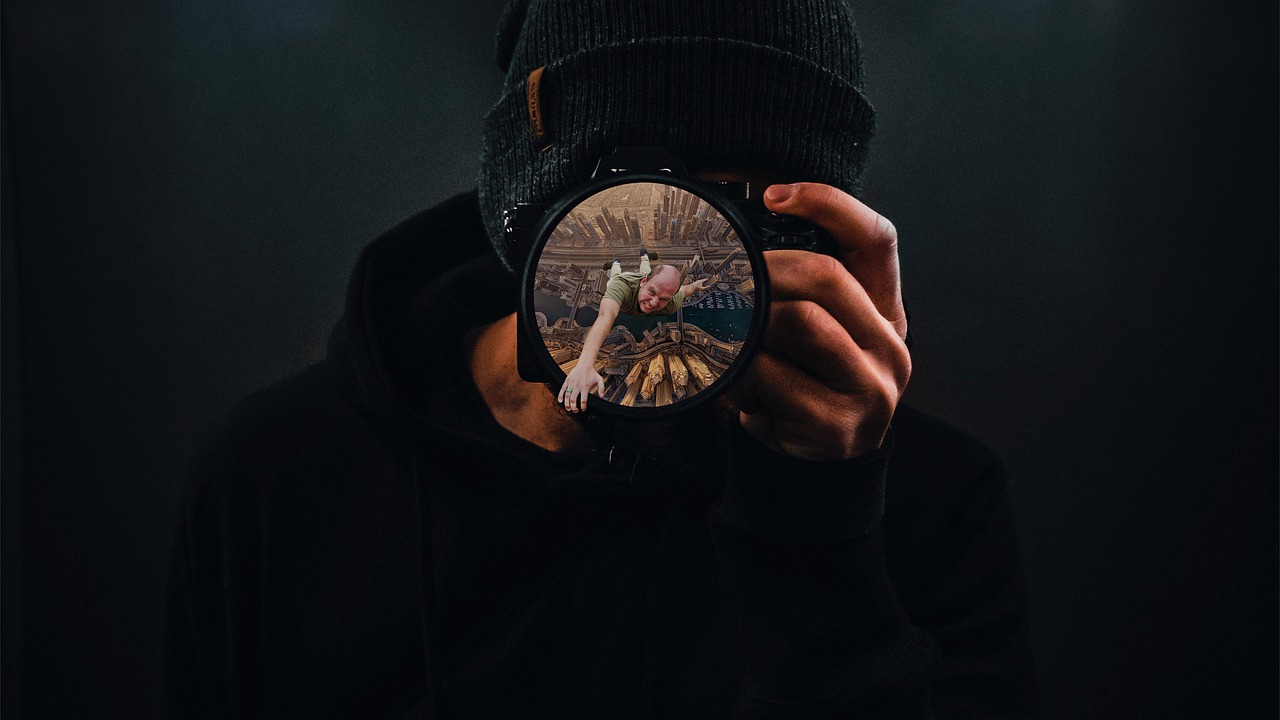
Photography has always been a medium defined by the tension between artistic vision and technological limitation. From the silver plates of the 19th century to the mirrorless revolution of the early 2020s, every leap forward has fundamentally changed how we perceive reality. As we enter 2026, we are standing on the precipice of a shift so radical that the very definition of a “photograph” is being rewritten. We are moving away from the “Capture” of light toward the “Computation” of images.
For a professional or an enthusiast today, the landscape is shifting underfoot. Just as a traveler might look for a nea casino to experience the latest innovations in digital entertainment and interface design, a photographer must now seek out new ways to integrate with evolving ecosystems. The camera is no longer just an eye; it is a sophisticated data-gathering device. Preparing for this future requires more than just buying the latest body; it requires a complete overhaul of how we think about pixels, light, and authenticity.
The Rise of Computational Photography
In 2026, the hardware in our hands is increasingly being supplemented by the software in our pockets. We have reached a point where “Glass” (lenses) can no longer overcome the laws of physics alone. Computational photography uses neural engines to combine dozens of frames in a fraction of a second, overcoming noise and dynamic range issues that previously required massive sensors.
This means that the “Standard” look is becoming so perfect that it is almost boring. The future of photography will likely involve a return to “Analog Character” as a way to stand out. Photographers who can purposefully introduce “flaws”—light leaks, specific grain structures, or optical aberrations—will be the ones who create images that feel human. While the machine strives for perfection, the artist must strive for soul.
AI as a Co-Creator, Not a Replacement
The most discussed and feared aspect of the future is Artificial Intelligence. However, the future is not about AI replacing the photographer; it is about AI acting as a high-level assistant. We are seeing:
- Context-Aware Culling: AI that can go through 5,000 wedding photos and identify the 100 with the best expressions, focus, and lighting, saving the artist days of tedious work.
- Generative Backgrounds: The ability to shoot a portrait in a boring studio and realistically place the subject on a mountain in Norway with perfect lighting integration.
- Predictive Autofocus: Systems that don’t just track an eye, but predict where a subject will move based on the sport or activity they are performing.
The photographers who thrive will be those who view AI as a “Labor Saver,” allowing them to focus 90% of their energy on the creative direction and 10% on the technical execution, rather than the other way around.
The Shift Toward Three-Dimensional Content
The “Flat” image is losing its dominance. With the widespread adoption of spatial computing and AR headsets, there is a growing demand for “Volumetric” and “Spatial” photography. These are images that have depth—you can move your head slightly and see “around” the subject.
This requires a different way of thinking about composition. You are no longer just framing a rectangle; you are capturing a scene. Preparing for this today means experimenting with photogrammetry and 360-degree capture. Even if these aren’t your primary outputs yet, understanding how to “think in 3D” will be a prerequisite for the high-end commercial market of the late 2020s.
The Ethics of the “Truth”
As images become easier to manipulate or entirely generate, the value of “Verified Reality” is skyrocketing. We are moving toward a world where a photograph’s value is tied to its “Provenance.”
| Concept | Traditional Photography | Future Photography (2026+) |
| Primary Goal | Capturing a moment | Creating an experience |
| Trust Source | The reputation of the outlet | Cryptographic “Content Credentials” |
| The “Negative” | A RAW file | A data set + metadata |
| Editing | Adjusting what is there | Enhancing or extending reality |
| Market Value | Based on the image itself | Based on the story and authenticity |
Content credentials (CR) are becoming the “Digital Signature” of the future. Professional cameras now bake cryptographic data into the file at the moment of capture, proving that the photo was taken at a specific place and time without significant AI manipulation. For journalists and documentary photographers, adopting these transparency standards is no longer optional—it is the only way to maintain trust.
The Video-First Mindset
The boundary between “Stills” and “Video” has almost completely dissolved. Most high-end cameras in 2026 are “Hybrid” by default. Clients no longer want just a gallery of photos; they want a “Brand Package” that includes short-form vertical video, cinemagraphs, and high-resolution stills.
If you are a photographer who “doesn’t do video,” you are effectively cutting your potential market in half. Learning the basics of motion—frame rates, shutter angles, and sound design—is the most practical way to prepare for the industry’s trajectory. You don’t need to be a Hollywood director, but you do need to understand how to tell a story that moves.
Conclusion: The Return to Philosophy
As technology becomes more capable, the “Bar to Entry” for taking a “Good” photo is dropping to zero. Anyone can press a button and get a perfectly exposed, sharp image. In this world, the only thing that retains value is the “Vision.”
The future of photography isn’t about the camera; it’s about the “Why.” Why are you taking this photo? What are you trying to make the viewer feel? As the machines take over the “How,” the human must reclaim the “Why.” Prepare for the future by sharpening your eyes, not just your software. Study art history, psychology, and storytelling. These are the only tools that won’t be obsolete in a decade.