
Light is the fundamental language of visual perception. In photography, cinematography, and even interior design, the choice between the sun’s rays and an electrical filament dictates the emotional resonance of a space or an image. As we move through 2026, the technology behind artificial illumination has reached a point where it can convincingly mimic the celestial cycles, yet the raw power and unpredictability of natural light remain irreplaceable. Understanding when to surrender to the sun and when to seize control with a toggle switch is what separates a technician from an artist.
The decision-making process often begins with the mood of the project. Natural light is celebrated for its organic transitions and the way it connects a subject to the real world. However, it is a fickle partner. It changes by the minute, affected by clouds, pollution, and the rotation of the earth. Artificial light, conversely, offers a level of consistency that allows for perfectionism. Whether you are illuminating a minimalist living room or a high-fashion portrait, the source of your photons will define the “truth” of the scene.
The Unmatched Vibrancy of the Sun
Natural light is a full-spectrum source that humans are biologically wired to crave. It carries a psychological weight that artificial sources often struggle to replicate. The “Golden Hour,” that short window of time just after sunrise or before sunset, provides a warmth and directional softness that creates long, romantic shadows and a glowing skin tone. This is the light of nostalgia and hope.
Conversely, “Blue Hour” offers a cool, tranquil atmosphere that works perfectly for urban landscapes and moody, contemplative portraits. The primary challenge with natural light is its lack of a “pause button.” If you are filming a scene that takes six hours to complete, the light at the beginning will look nothing like the light at the end. This is where “scrims” and “reflectors” become essential tools for the naturalist, allowing them to manipulate the sun’s rays without losing their organic quality.
The Precision of Artificial Illumination
Artificial light is the tool of the controller. In a studio environment, you are the god of your own small universe. You can freeze time, keeping the “sun” at a perfect forty-five-degree angle for fourteen hours straight. With the advancement of LED technology in 2026, lights have become more portable, cooler to the touch, and infinitely adjustable in terms of color temperature.
We now use RGBWW panels that can recreate the exact Kelvin value of a candle, a fluorescent office tube, or a midday sky in the Sahara. This control is vital for commercial work where brand colors must be reproduced with scientific accuracy. Artificial light also allows for the creation of “impossible” scenarios—dramatic high-contrast looks that the sun could never produce on its own.
When to Choose One Over the Other
The “When” is often determined by the constraints of the environment and the desired level of realism. If the goal is to document a moment in its rawest form, artificial light can often feel “intrusive.” It creates a barrier between the subject and the viewer. However, in the depths of winter or in a windowless basement, artificial light is not just a choice; it is a necessity.
- Portraiture: Use natural light for a soft, approachable, and authentic feel. Switch to artificial light (strobes or continuous LEDs) for high-fashion, dramatic shadows, or when you need to “sculpt” the face.
- Architecture: Natural light shows how a building lives during the day. Artificial light (interior lamps) shows how it feels at night.
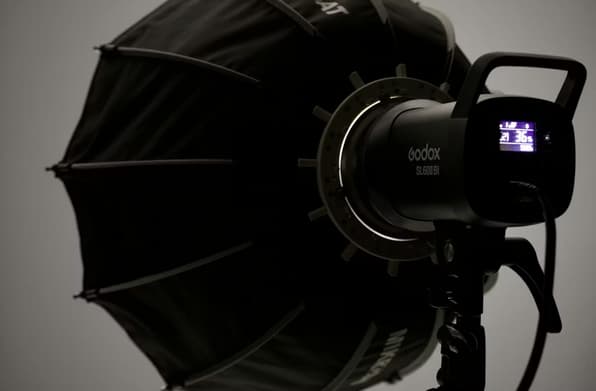
- Product Photography: Almost exclusively artificial. The need for absolute sharpness and zero glare on reflective surfaces requires the surgical precision of softboxes and grids.
Technical Comparison of Light Sources
| Feature | Natural Light | Artificial Light |
| Color Accuracy | Perfect (CRI 100) | Variable (CRI 90-98) |
| Cost | Free | Requires investment in gear |
| Control | Low (Mother Nature’s whim) | Absolute (Intensity and direction) |
| Consistency | Changes constantly | Stays the same until switched off |
| Reliability | Weather dependent | Power/Battery dependent |
| Setup Time | Instant (Find the window) | Can take hours for complex rigs |
The Hybrid Approach: Mixing the Two
In modern high-end production, we rarely use just one. The “Mixed Lighting” technique involves using natural light as your “Key” (main) light and artificial lights as “Fills” or “Kickers” to separate the subject from the background. This creates a look that feels natural to the eye but possesses the polish of a professional production.
The trick to mixing sources is matching the “White Balance.” If the sun coming through the window is 5600K (cool) and your indoor lamp is 3200K (warm), the resulting image will have a distracting color cast. In 2026, we use “Gels” or variable-output LEDs to match these temperatures perfectly, ensuring that the artificial light feels like an extension of the sun rather than a competitor.
The Future of Light: Bio-Centric Systems
As we look toward the future, the gap is closing. We are seeing the rise of “Circadian Lighting” in both photography and architecture. these are systems that automatically shift their intensity and color throughout the day to mimic the sun’s natural rhythm. This reduces eye strain and improves the biological health of people living indoors. For creators, this means the choice between “Natural” and “Artificial” is becoming less about the source and more about the philosophy of the image.
Whether you are standing in a field at dawn or in a blacked-out studio in the city, the light you choose is the first brushstroke on your canvas. Respect the sun, but master the switch.